





Eye For Film >> Movies >> Màquina (2026) Film Review



It’s said that there is a genetic component to alcoholism, and perhaps other kinds of addiction – a vulnerability that runs in families. We know that people get trapped by it more easily when they spend a lot of time around other addicts. But might familial love help to create a way out?
It has to be done now, Marcel explains to his father Xaví, because the three of them – a phrase which includes the director, his younger brother Joaquim Adrià Pujol – are on the same page. Such occasions have been rare and, indeed, they might not get another. The plan is to tackle Xaví’s alcoholism and Marcel’s assortment of addiction issues by undergoing treatment with ibogaine. This will involve microdosing on a daily basis as they travel cross-country in their old Winnebago to a Colorado clinic where they can receive heavier treatment with appropriate medical support. Even microdoses of ibogaine have mild psychedelic effects, and this gives Joaquim some poetic licence when it comes to creating visuals which might speak to their experience.

We don’t get these straight away. Xaví, despite his condition, keeps an attractive home with long windows and a bright balcony well suited for filming, but we spend more time in Marcel’s drab abode, its undecorated, time-stained walls and kitchen surfaces communicating the kind of blankness and lack of care which often emerges from routine drug use. When the journey begins, Joaquim shoots from deep inside the van, so that the view from its windows becomes a detail in a more mundane setting. It’s only when it comes to a stop due to an overheated engine that we are suddenly able to take in the beauty of the open road and its surroundings.
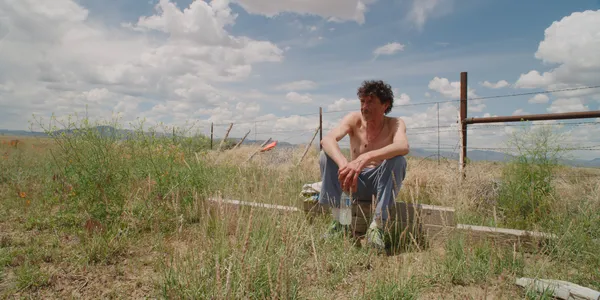
Sprawling scrubland, distant mountains, a shallow river, red sandstone cliffs and buttes – all these images assail us one after another, under a pale, dusty blue sky. They are landscapes full of possibility, opening up a sense of what might be possible beyond the prison of addiction. Many an addict will tell you that quitting is easier if one can get away from familiar surroundings. These surroundings are actively inspiring, and through them, the family members begin to form new, stronger connections. The discovery of horse bones bleached by the sun gives Xaví an opportunity to reveal extensive knowledge from a childhood before he migrated to the US. In a slow-flowing stream, they find tadpoles, and he laughs when Marcel asks if it’s really true that that thing can turn into a frog.
Xaví talks about his memories of his father and the sadness that he felt at being unsupported in his career, in this art. he has tried, he says, to be a good father, and stereotypes are shattered when his sons agree that he succeeded. Later, however, Marcel will reflect on a more difficult and distressing part of his childhood. At various stages he also talks about his experiences of being homeless as a young adult – finding shelter for sleeping, but finding ordinary things like bathing and doing laundry a tremendous challenge. Though they obviously take courage to discuss, these subjects offer valuable insights into matters rarely addressed this honestly on film.
It’s a gently paced film, slow to get to where it’s going but full of interesting observations along the way, and not afraid to face up to hard truths. The use of metaphorical imagery, such as Marcel gazing up from the bottom of a steep, narrow canyon, sits effectively alongside much more direct passages of to-camera narration. The condition of the subjects does not impair their ability to contribute ideas, and the fact that it’s a family production gives it a very particular kind of intimacy.
There are relatively few films about addiction which successfully chart a course between condemnation and romanticisation. Màquina keeps it real, but recognises how specific and individual each addict’s real experience is. It’s a modest, low budget work, but punches above its weight.
Reviewed on: 13 Sep 2026


Festivals:
Search database: